Rossini’s The Barber of Seville is a comic opera built around disguise, deception, and social convention. At the heart of the production was the idea that, both on stage and in everyday life, people perform different versions of themselves in order to gain acceptance, status, or freedom. The focus in this version of the classic opera was on Rosina and her journey from confinement towards independence. Rosina’s story became one of learning how to take control of the role that society has assigned to her and reshape it on her own terms.
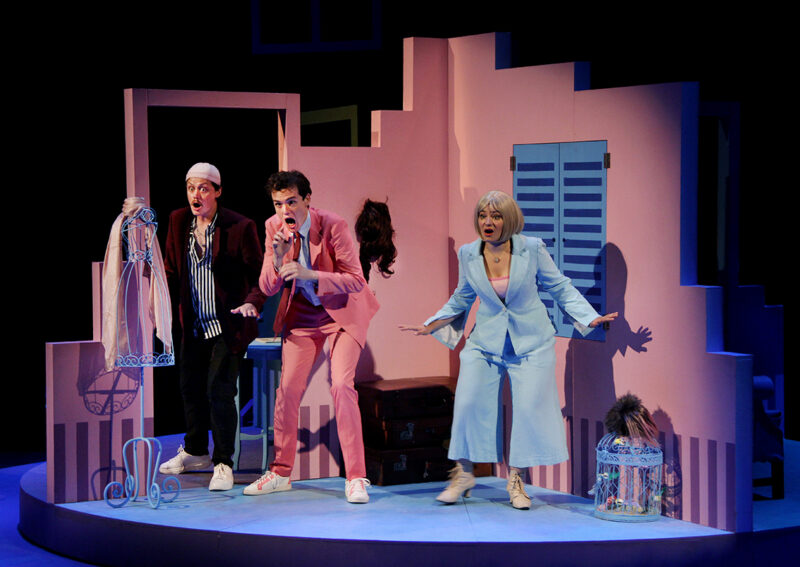
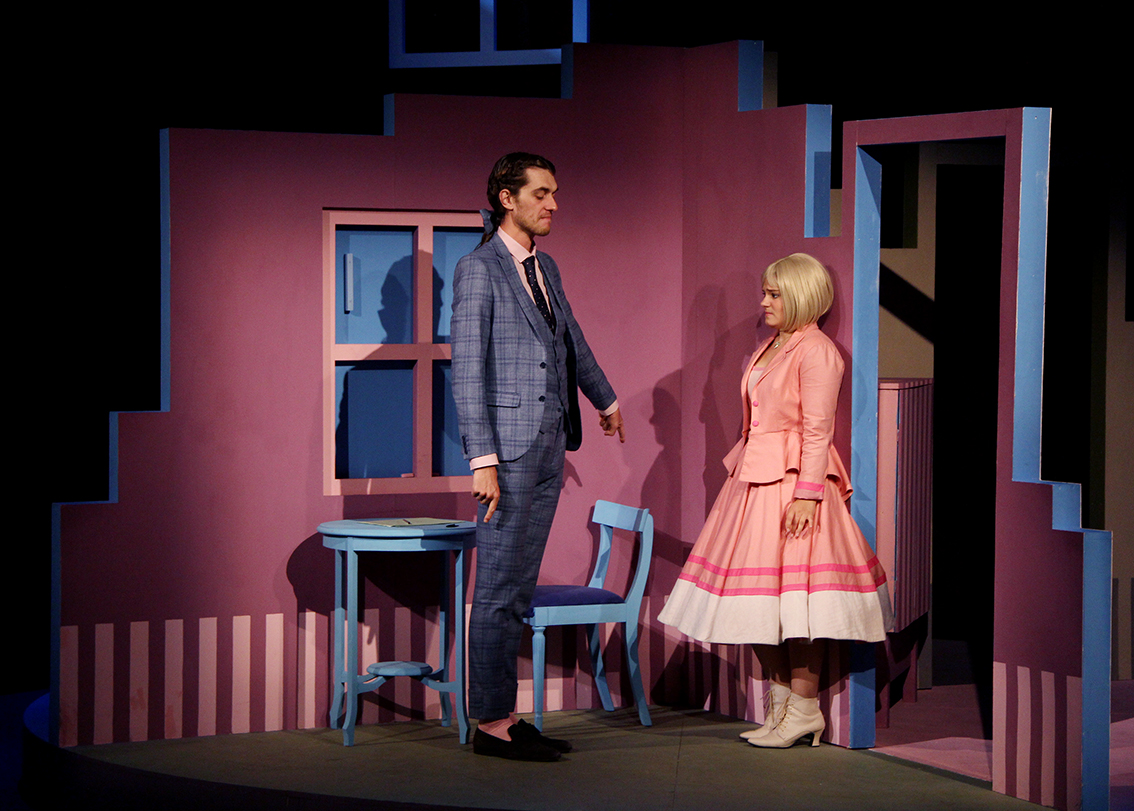
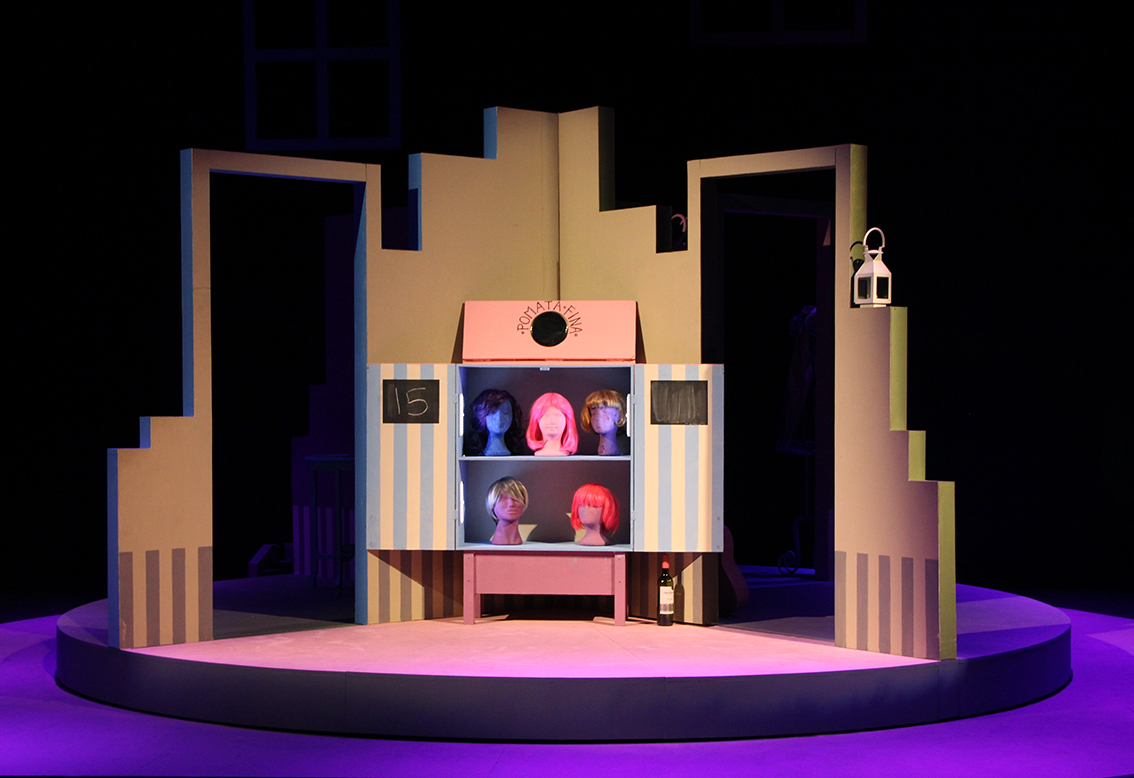
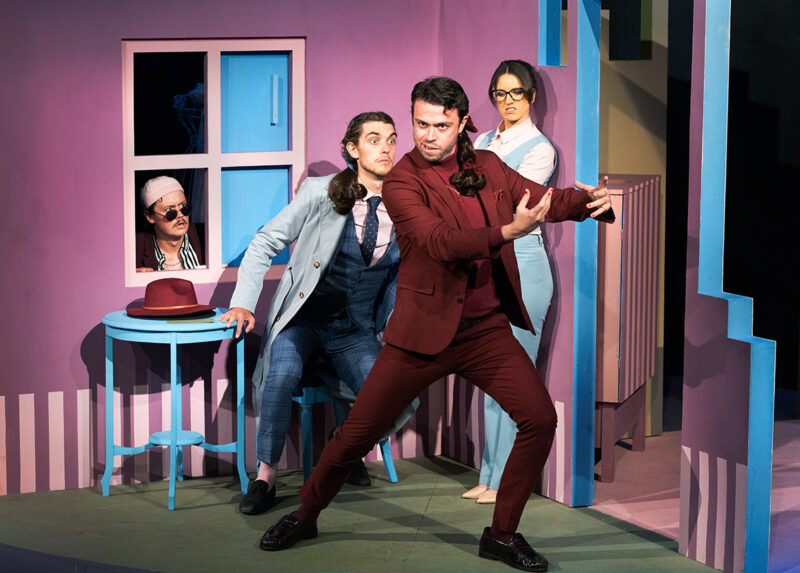
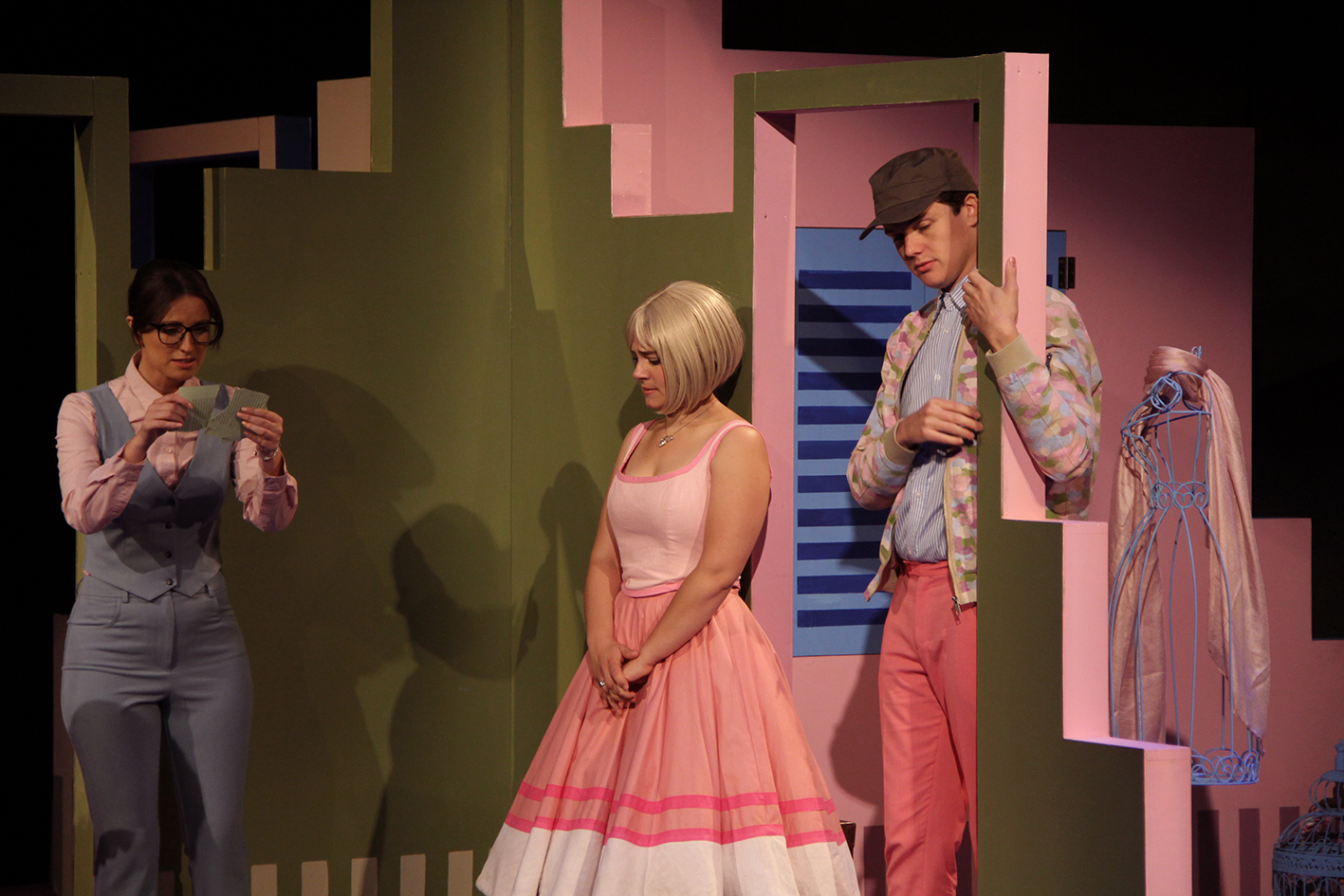
Director Julia Burbach and designer Bettina John developed the opera as a psychological space rather than a realistic setting. A revolving set of four rooms allowed locations and states of mind to shift quickly throughout the performance, moving from Rosina’s restrictive domestic environment to Figaro’s barber shop, a place associated with new ideas, invention, and possibility.
Bettina John drew inspiration from the worlds of circus, fun fairs, and afternoon tea culture. These are environments built around display, performance, and carefully constructed appearances. Bright colours, decorative surfaces, cakes, confectionery, and occasionally unexpected colour combinations informed both the set and costume designs.
Set and Costume Design: Bettina John
Director: Julia Burbach and Greg Eldridge
Music direction: Philip Sunderland
Lighting design: Steven Benson
Cast:
Henry Neill | Figaro
Samuel Kibble | Count Almaviva
Elsa Roux Chamoux | Rosina
Adam Maxey | Dr. Bartolo
Benjamin Schilperoort | Don Basilio
Faryl Smith| Berta
George Reynolds | Fiorello
Costume supervisor: Evelien Van Camp
Company director: Ben Cook
♦♦♦♦ Stars reviews
Robert Beale: “A delicious box of bon bons”